Quick Answer: An RCD tripping at night is usually caused by a faulty electrical appliance, earth leakage, moisture ingress or damaged wiring. Appliances such as fridges, freezers, boilers and immersion heaters can develop intermittent faults when operating overnight. If your RCD keeps tripping, avoid repeatedly resetting it and contact a qualified electrician to identify the underlying electrical fault.
RCD tripping at night is usually caused by an electrical appliance developing a fault, moisture affecting electrical equipment, damaged wiring or excessive earth leakage. Appliances such as fridges, freezers and boilers operate automatically overnight, which can explain why an RCD trips while everyone is asleep.
If your electricity keeps tripping at night, it is important to identify the cause rather than repeatedly resetting the switch. Although an RCD is designed to protect against electric shock, frequent tripping may indicate an electrical fault that requires professional attention.
This guide explains why RCDs trip overnight, which appliances could be responsible, what you can safely check and when to contact an electrician.
Why Does My RCD Keep Tripping Overnight?
An RCD keeps tripping overnight when it detects an imbalance between the electrical current flowing into and returning from a protected circuit. This can happen because an appliance develops an intermittent fault, moisture affects electrical insulation or several appliances produce enough combined earth leakage to trigger the device.
The problem may only become noticeable at night because certain appliances operate automatically.
For example, a boiler may activate when the heating switches on, while a fridge or freezer compressor starts and stops throughout the night.
Other possible causes include:
- Faulty appliances: Damaged components or heating elements can allow current to leak to earth.
- Deteriorated wiring: Damaged insulation can create an unintended electrical path.
- Moisture ingress: Water entering outdoor sockets or lighting equipment can cause electrical faults.
- Cumulative earth leakage: Small leakage currents from several appliances can combine and trigger an RCD.
- A defective RCD: Occasionally, the protective device itself may require replacement.
An occasional trip should not automatically be dismissed. If the RCD trips repeatedly, the underlying cause needs investigating.
What Is an RCD and How Does It Work?
An RCD, or residual current device, is an electrical safety device that disconnects the electricity supply when it detects an imbalance between current flowing through the live and neutral conductors. This imbalance can indicate that electrical current is escaping through an unintended path, potentially creating an electric shock hazard.
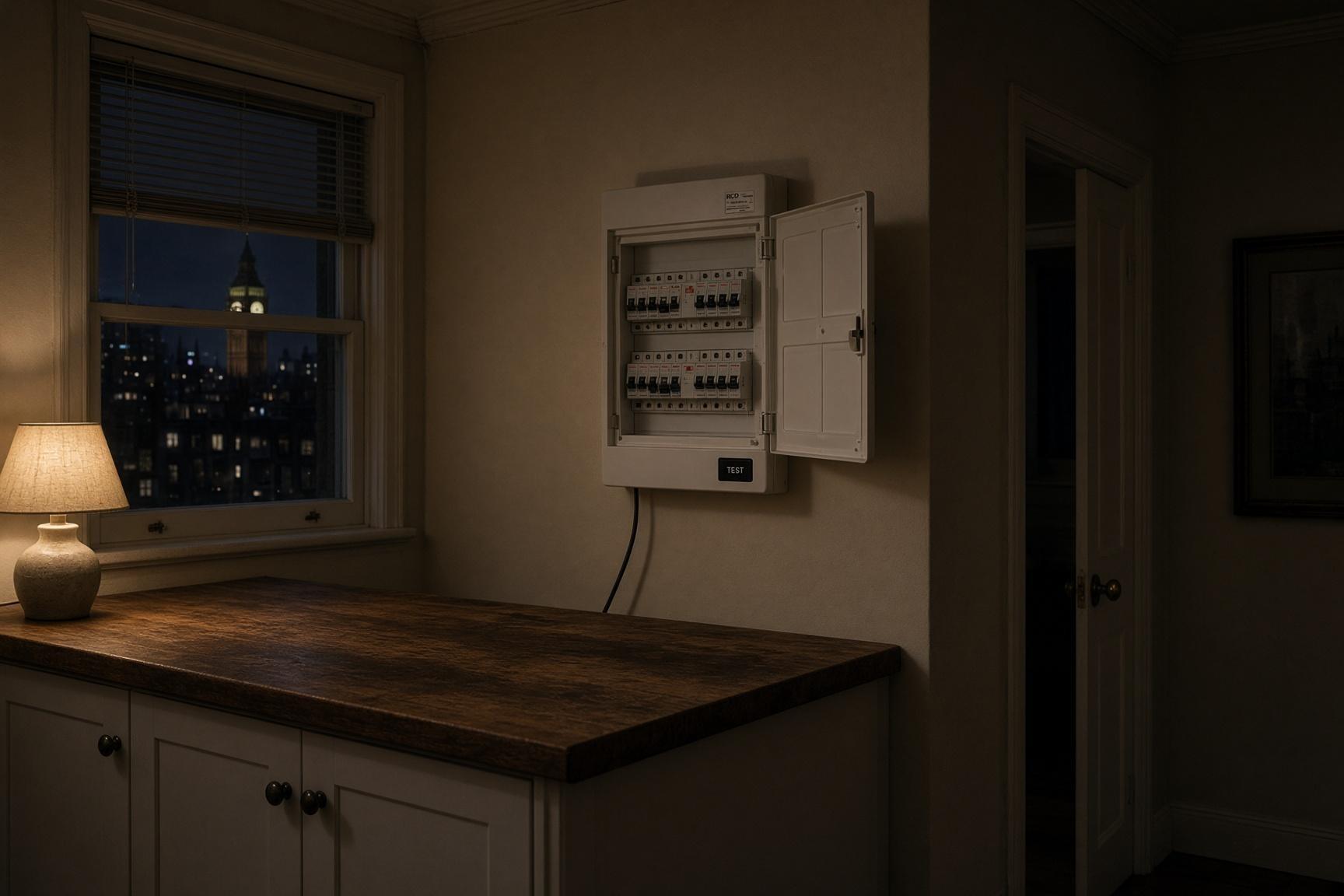
RCD protection is commonly incorporated into the consumer unit, sometimes called the fuse board.
What Is the Difference Between an RCD and a Circuit Breaker?
An RCD and a miniature circuit breaker (MCB) provide different types of electrical protection.
An RCD detects residual current imbalances associated with earth leakage.
An MCB protects a circuit against excessive current caused by an overload or short circuit.
An RCBO combines residual-current protection with overcurrent protection for an individual circuit.
This explains why an RCD can trip even when the individual circuit breakers remain switched on.
Importantly, an overloaded circuit does not normally cause a standard RCD to trip by itself. Overloads are primarily handled by circuit breakers, although certain electrical faults may involve both overcurrent and earth leakage.
Which Appliances Can Cause an RCD to Trip at Night?
Appliances that operate automatically or remain connected overnight can cause an RCD to trip if they develop insulation faults or electrical leakage. Common examples include fridges, freezers, boilers, immersion heaters, electric heating systems and outdoor lighting.
Fridges and Freezers
A fridge or freezer may cause intermittent RCD trips because its compressor operates automatically to maintain the correct temperature.
If the compressor, wiring or another electrical component develops an insulation fault, the RCD may trip when the appliance starts operating.
However, a fridge running overnight does not necessarily mean it is responsible.
If you suspect a refrigeration appliance, arrange professional testing rather than repeatedly disconnecting it and risking food spoilage.
Boilers and Central Heating Systems
A boiler causing an RCD to trip may have a faulty electrical component, moisture-related damage or deteriorating insulation.
Central heating systems often operate according to programmed schedules or thermostat settings.
Consequently, an electrical fault may only appear when the heating activates during the night or early morning.
Boilers and heating controls should be assessed by appropriately qualified professionals. Gas-related work must be undertaken by a Gas Safe registered engineer.
Immersion Heaters and Electric Heating
An immersion heater tripping the RCD may have a deteriorating heating element that allows electrical current to leak to earth.
The fault can become apparent when the element heats up or when the hot water timer activates.
Electric underfloor heating and other fixed heating systems can also develop insulation faults.
Because these systems involve fixed electrical equipment, testing and repairs should be carried out by a competent electrician.
Washing Machines and Dishwashers
Washing machines and dishwashers contain motors, pumps, heating elements and electrical controls.
A damaged component may cause the RCD to trip during a particular stage of a washing cycle.
If the appliance runs overnight, the electrical fault may appear to occur randomly.
Stop using any appliance suspected of causing repeated trips until it has been checked.
Can Damp or Faulty Wiring Cause Night-Time RCD Trips?
Yes. Damp electrical equipment and faulty wiring can cause night-time RCD trips because moisture or damaged insulation may allow electrical current to flow through an unintended path. These faults can be intermittent, particularly when conditions change or affected equipment switches on.
Moisture in Outdoor Electrical Equipment
Outdoor sockets, garden lighting and electrical connections are exposed to changing weather conditions.
If water enters an electrical fitting, it can reduce insulation resistance and contribute to earth leakage.
For example, an outdoor lighting circuit may trip an RCD when a timer switches the lights on after dark.
Wet weather may make the problem more noticeable, although the precise cause requires testing.
Damaged or Deteriorating Wiring
Electrical wiring can deteriorate through age, physical damage, heat exposure or environmental conditions.
Damaged cables and insulation breakdown may create intermittent earth faults.
In older properties, including some period homes across Fulham and West London, the condition of the original electrical installation may warrant assessment.
However, the age of a property alone does not establish that its wiring is unsafe or requires replacement.
A qualified electrician can test the installation to identify whether localised electrical repairs or more extensive work are necessary.
Cumulative Earth Leakage
Some electrical appliances produce small amounts of normal leakage current.
When several appliances share one RCD, their combined leakage may approach the device’s operating threshold.
A further change in leakage current can then cause the RCD to trip.
This is one reason why the problem may occur when multiple appliances or heating systems operate together overnight.
Professional earth leakage testing can help determine whether cumulative leakage is contributing to repeated tripping.
What Should I Do When My RCD Trips at Night?
If your RCD trips at night, first check for obvious signs of electrical danger. If there is no smoke, burning smell, visible damage or other warning sign, you may be able to identify whether a particular plug-in appliance is involved without touching any wiring or opening the consumer unit.
Follow these safety precautions:
- Look for warning signs. Check for smoke, burning smells, unusual buzzing, sparks or visible water damage without touching affected equipment.
- Avoid unsafe equipment. Do not touch wet sockets, damaged plugs or electrical fittings.
- Disconnect accessible plug-in appliances if safe. Do not disconnect hardwired equipment or move heavy appliances to reach sockets.
- Note when the fault occurs. Record whether the trip coincides with heating, hot water, refrigeration or outdoor lighting operation.
- Arrange professional assistance if the fault repeats. Do not repeatedly reset an RCD that continues to trip.
If the RCD has tripped once and there are no signs of danger, a single reset in accordance with the manufacturer’s instructions may be reasonable.
However, if it trips immediately or repeatedly, leave the affected supply switched off and contact an electrician.
Never bypass an RCD, interfere with wiring or open the consumer unit.
If there is smoke or evidence of fire, move to safety and contact the emergency services.
Why Does My RCD Keep Tripping After I Unplug Everything?
If an RCD continues tripping after accessible appliances have been unplugged, the fault may involve fixed wiring, lighting circuits, hardwired equipment, cumulative leakage or the RCD itself. Unplugging appliances does not isolate every electrical component connected to the installation.
For example, an immersion heater, boiler connection or outdoor lighting circuit may remain connected.
An electrician may need to investigate:
- Damaged wiring inside walls or ceilings
- Faulty outdoor electrical installations
- Hardwired heating equipment
- Insulation resistance problems
- Neutral-to-earth faults
- Incorrect or deteriorated electrical connections
- A defective RCD or consumer unit component
A tripping RCD does not automatically mean that the entire consumer unit needs replacing.
Professional testing should establish whether the issue requires a component repair, circuit repair or replacement protective device.
How Does an Electrician Diagnose an RCD Fault?
An electrician diagnoses repeated RCD tripping by inspecting the electrical installation, identifying affected circuits and carrying out appropriate electrical tests. These may include insulation resistance testing, earth leakage measurements and RCD operating tests.
The precise testing process depends on the symptoms and the condition of the installation.
Electrical Fault Finding
An electrician may investigate which circuits are affected and whether the fault occurs when particular equipment operates.
Specialist instruments can help identify electrical leakage and insulation defects that are not visible during a basic inspection.
Intermittent faults can require additional investigation because the problem may not be present continuously.
RCD Testing
Professional RCD testing assesses whether the protective device operates correctly under specified test conditions.
The electrician can determine whether the device is functioning appropriately or whether replacement should be considered.
The RCD test button provides a basic functional check, but it does not replace professional electrical testing.
Electrical Installation Condition Reports
An Electrical Installation Condition Report (EICR) assesses the condition of an electrical installation and identifies relevant defects or safety concerns.
An EICR may be appropriate where wider electrical deterioration is suspected, particularly in older or rented properties.
However, a targeted fault-finding visit may be more appropriate for diagnosing a specific intermittent trip.
The electrician should recommend the appropriate investigation based on the circumstances.
When Should I Call an Electrician for an RCD That Keeps Tripping?
You should contact a qualified electrician when an RCD trips repeatedly, cannot be reset safely, trips after appliances have been disconnected or shows signs of a potentially dangerous electrical fault. Persistent tripping should not be ignored simply because the electricity can sometimes be restored.
Professional assistance is particularly important if:
- The RCD trips immediately after resetting.
- Power repeatedly cuts out overnight.
- The consumer unit produces buzzing or crackling sounds.
- There is a burning smell or visible heat damage.
- Water has entered electrical equipment.
- Several circuits lose power unexpectedly.
- You suspect damaged wiring or a faulty fixed appliance.
For landlords and property managers, repeated electrical trips should also be documented and investigated promptly to protect occupants and maintain electrical safety.
Electrical Fault Finding in Fulham and West London
If your electrics keep tripping overnight, TNS Electrical Solutions can be contacted to discuss the problem and confirm the appropriate electrical fault-finding or repair service.
For homeowners, landlords and businesses in Fulham (SW6) and surrounding West London areas, the first step is to describe the symptoms, including when the RCD trips and which circuits or appliances appear affected.
A professional assessment can establish whether the problem involves an appliance, wiring, protective device or another part of the electrical installation.
How Can I Prevent Repeated RCD Trips?
Preventing repeated RCD trips involves maintaining electrical equipment, addressing moisture problems, replacing damaged appliances and arranging suitable electrical inspections. Prevention should focus on correcting the underlying fault rather than stopping the protective device from operating.
Practical measures include:
- Checking accessible plugs and cables for visible damage.
- Keeping outdoor electrical equipment protected from water ingress.
- Having faulty appliances repaired or replaced.
- Arranging electrical inspections at appropriate intervals.
- Avoiding overloaded extension leads and socket arrangements.
- Addressing recurring electrical faults promptly.
If an older consumer unit has inadequate protection or defects, an electrician may recommend upgrading it.
However, installing a new consumer unit will not automatically correct damaged wiring or faulty appliances.
The existing installation should be assessed before replacement work is undertaken.
Frequently Asked Questions
Can an RCD Trip for No Reason?
An RCD may appear to trip for no reason when the electrical fault is intermittent or hidden. Possible causes include moisture, damaged insulation, faulty appliances and cumulative earth leakage. A defective RCD is another possibility, but professional testing is needed to establish the cause.
Why Does My RCD Trip at the Same Time Every Night?
An RCD that trips at approximately the same time each night may be responding to equipment controlled by a timer or thermostat. Boilers, immersion heaters, electric heating and outdoor lighting are possible examples. The timing provides a useful clue but does not confirm which appliance is faulty.
Is It Dangerous if My RCD Keeps Tripping?
Repeated RCD tripping may indicate an electrical safety issue. Although the device is designed to reduce electric shock risks, the underlying fault could remain dangerous. Avoid repeatedly resetting the RCD and arrange professional investigation.
Can a Faulty RCD Cause Repeated Power Cuts?
Yes. A defective RCD may cause unwanted disconnections, although appliance faults and wiring problems are often alternative explanations. An electrician can test the device and determine whether replacement is necessary.
Does RCD Tripping Mean I Need a New Consumer Unit?
Not necessarily. A faulty appliance, damaged cable or localised wiring problem may be responsible. Consumer unit replacement should be recommended only when inspection and testing establish that it is appropriate.
Get Help With RCD Tripping at Night
If your RCD keeps tripping overnight, identifying the underlying electrical fault is essential for restoring a reliable and safe electricity supply.
Whether the problem involves an appliance, damaged wiring, moisture ingress or the consumer unit, professional fault finding can help establish the appropriate repair.
Contact TNS Electrical Solutions to discuss RCD tripping, electrical faults or consumer unit concerns in Fulham and West London.
Disclaimer: This article provides general information and is not a substitute for professional electrical inspection or advice. Do not open a consumer unit, interfere with fixed wiring, bypass protective devices or repeatedly reset an RCD that continues to trip. If you suspect an electrical hazard, stop using the affected equipment and seek assistance from a competent electrician.