
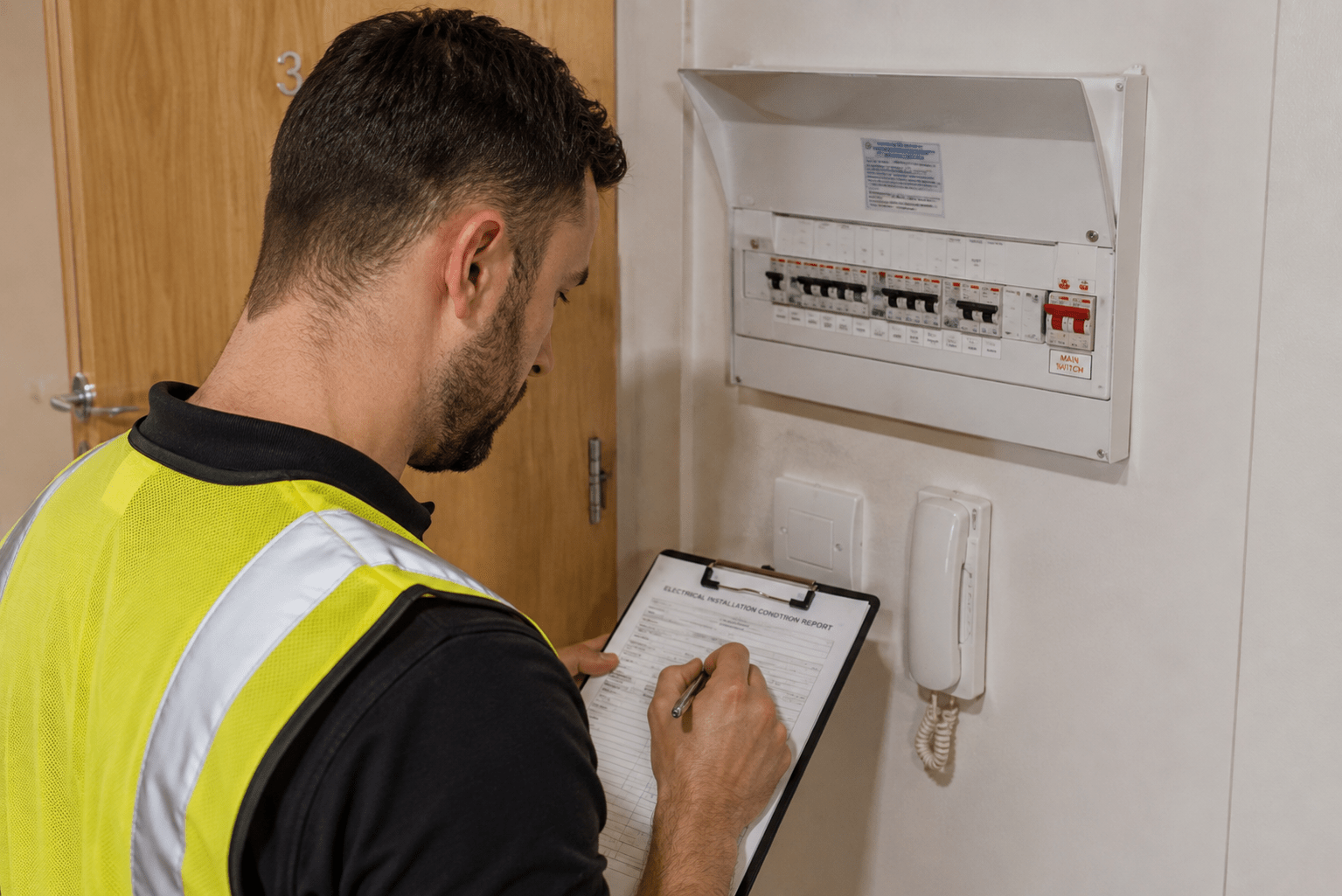
Quick Answer: Yes, an electrical inspection can help reduce insurance risks for landlords by identifying electrical faults and potential hazards before they lead to fire, injury or property damage. A current Electrical Installation Condition Report (EICR) also provides evidence that the property’s fixed electrical installation has been professionally inspected and helps landlords meet their electrical safety responsibilities. However, an EICR does not automatically reduce insurance premiums or guarantee that a future claim will be accepted, as this depends on the individual insurer and policy terms.
If you own a rental property, you already know that managing risk comes with the territory. A leaking pipe can become water damage, a small maintenance issue can turn into an expensive repair, and an electrical fault can potentially become something far more serious.
So, can an electrical inspection help reduce insurance risks for landlords? In practical terms, yes. A professional electrical inspection can identify defects before they develop into more serious hazards, provide documented evidence of the condition of your electrical installation and help you meet your electrical safety responsibilities as a landlord.
However, there is an important distinction to make from the start. Having an electrical inspection does not automatically reduce your insurance premium, guarantee that an insurer will accept a future claim or replace the need to follow the terms of your policy.
What it can do is help you manage the underlying risks that insurers care about, particularly electrical fires, unsafe wiring, defective protective devices and poor property maintenance.
At TNS Electrical Solutions, we regularly work with landlords and property managers who want more than a certificate. They want to know what condition their electrics are actually in, what needs attention and how to keep their properties safe and compliant.
Here is what landlords should know.
What Does an Electrical Inspection Actually Check?
When landlords talk about an electrical inspection, they will usually be referring to an Electrical Installation Condition Report or EICR.
An EICR assesses the condition of the fixed electrical installation and broader electrical systems within a property, including fixed electrical equipment and electrical fixtures that form part of the installation. That includes areas such as:
- Fixed wiring and electrical circuits
- plug sockets
- Light fittings
- The consumer unit
- Earthing and bonding arrangements
- Protective devices
- Signs of deterioration, damage or potentially unsafe alterations
The aim is not simply to look around the property and confirm that the lights switch on.
A proper inspection involves testing the installation and identifying defects or conditions that could affect its safety. It combines a visual inspection with electrical testing as part of a thorough assessment.
For landlords, that matters because electrical problems are not always obvious. A socket may appear perfectly normal from the outside while there is deterioration, damage or an unsuitable connection elsewhere in the circuit.
This is one reason preventative inspection is so valuable. You would rather discover a developing electrical issue during planned testing than after your tenant reports burning smells, repeated tripping or loss of power.
If you would like a deeper explanation of the certification itself, our guide on whether electrical certificates are a legal requirement for homeowners and landlords covers the subject in more detail.
How Can an Electrical Inspection Reduce Insurance Risks?
There are several ways an electrical inspection can contribute to better risk management.
It Can Find Electrical Hazards Before They Cause Damage
This is perhaps the biggest benefit.
Electrical installations deteriorate. Properties are altered. Additional sockets get installed, consumer demand increases and previous work may not always have been completed to the standard you would expect.
An EICR gives you an opportunity to identify safety concerns such as faulty wiring, potential electric shock risks, and fire hazards before they cause damage.
Depending on the property, an electrician may find electrical issues involving damaged wiring, inadequate protection, defective accessories, potential fire hazards, or other problems requiring further investigation or remedial work.
From a landlord’s perspective, finding those issues early can mean the difference between arranging a controlled repair and responding to an electrical emergency. Early action can also help avoid costly repairs and better protect tenant safety.
That is sensible property management regardless of insurance. Some insurers may look more favourably on properties with up-to-date electrical systems, although that should not be treated as a guaranteed premium reduction.
It Gives You a Documented Electrical Safety Record
There is another side to electrical inspections that landlords sometimes overlook: paperwork.
An EICR gives you a detailed report of the inspection and its findings, which can also help show you have met key legal requirements.
This can help demonstrate that electrical safety has been actively managed rather than ignored.
For example, if an inspection identifies remedial work, keeping the original report together with the appropriate certification or written confirmation following the work creates a much clearer maintenance trail. Documentation from the person conducting the inspection can also help if compliance is later questioned by an insurer or local authority.
Insurers set their own policy conditions and evidence requirements, so an EICR should never be treated as a guarantee that a particular claim will be accepted. However, maintaining clear inspection and repair records is a sensible part of demonstrating responsible property management and reducing the risk of legal action if you later need to show how electrical safety was managed.
TNS also provides detailed EICR reports as part of our electrical inspection and certification services, with support available where follow-up repairs are required.
It Helps You Stay on Top of Your Legal Responsibilities and Electrical Safety Regulations
For landlords, electrical inspections are not simply an optional insurance precaution; they are a legal obligation for those within scope.
In England, landlords covered by the electrical safety regulations must ensure electrical installations in residential premises are inspected and tested at intervals of no more than five years, unless an earlier inspection is required, where the property is let as the tenant’s only or main residence.
The Electrical Safety Standards regulations came into force on 1 June 2020.
The landlord must obtain a report, usually an EICR, completed by a qualified electrician or registered electrician, showing the results and the date of the next inspection.
Current GOV.UK electrical safety guidance for landlords also states that where remedial or further investigative work is required, it generally needs to be completed within 28 days, or sooner where the report specifies a shorter period.
Failure to comply can lead to fines up to £40,000, and the local authority can recover costs for remedial work from landlords.
Keeping on top of these requirements helps reduce regulatory risk alongside physical electrical risk.
It is worth noting that electrical safety rules differ across England, Wales, Scotland and Northern Ireland, so landlords should always check the rules applying to the location and type of property they let. Tenancy structure, including periodic tenancy, can affect how duties apply, so check the rules for your property type and jurisdiction.
What Do the EICR Codes Mean for a Landlord?
This is an area where we often see confusion.
An EICR does not simply say “pass” or “fail” without explanation. The electrical inspector uses the report to assess the safety of the electrical systems and classify observations.
The main classifications include these findings recorded on electrical installation condition reports:
C1: Danger present
This indicates an immediate risk of injury and requires urgent attention.
C2: Potentially dangerous
There is a potentially dangerous condition that requires remedial work.
FI: Further investigation required
The inspector has identified something that needs further investigation without delay.
C3: Improvement recommended
This does not make an EICR unsatisfactory by itself. Instead, it identifies an improvement that would enhance the safety of the installation.
Current government guidance confirms that C1 and C2 observations require remedial work, while FI requires further investigation. C3 is an improvement recommendation rather than mandatory remedial work for an otherwise satisfactory report.
For landlords, the important point is not to file an unsatisfactory report away and forget about it.
The value of an electrical inspection comes from acting on what it tells you.
Will an EICR Make My Landlord Insurance Cheaper?
Not necessarily.
This is probably one of the biggest misconceptions around electrical inspections and insurance.
An EICR is primarily an electrical safety and compliance document, not a discount voucher for landlord insurance.
Individual insurers calculate premiums differently. The insurance industry does not treat an EICR as a universal basis for discounts. They may consider factors such as the property type, location, rebuilding cost, claims history, occupancy, security, level of cover and other risks.
Your insurer may also impose specific conditions concerning maintenance and electrical safety.
Therefore, you should not assume that obtaining an EICR will automatically reduce your premium.
The better way to think about it is this: an electrical inspection helps you reduce and manage the property risks that could potentially lead to an insurance claim.
Preventing a serious electrical fault in the first place is generally far better than dealing with the disruption and cost after something goes wrong, and keeping electrical systems up to date may help present a lower-risk property profile even though savings are never guaranteed.
Could a Missing or Outdated EICR Affect an Insurance Claim?
This depends on your policy, the circumstances of the incident and the insurer’s terms.
There is no responsible one-size-fits-all answer.
What we would advise landlords to do is read their policy documentation carefully and speak directly to their insurer or broker if they are unsure about electrical inspection requirements.
Do not assume that because you have landlord insurance, every electrical incident is automatically covered.
Likewise, do not assume an EICR guarantees a claim.
Insurance policies can contain conditions relating to property maintenance, legal compliance and reasonable precautions. Your insurer is the right source for clarification on exactly what applies to your cover.
From an electrical safety perspective, the sensible approach is straightforward: keep inspections current, deal with identified defects promptly and retain your documentation.
Is an EICR Enough to Manage Every Electrical Risk?
No, and this distinction is important.
An EICR concerns the property’s fixed electrical installation. It does not mean every portable or other landlord-supplied electrical appliances within a furnished rental has automatically been tested.
If you provide appliances such as kettles, microwaves, lamps or other plug-in equipment, you should consider their condition and safety separately, because an EICR focuses on the fixed installation rather than those items.
Portable Appliance Testing in London can form part of a wider electrical safety programme for landlords and property managers.
An EICR and PAT testing serve different purposes, so one should not automatically be treated as a substitute for the other.
You can also read our guide to PAT testing requirements for landlords and property owners if you want to understand that distinction in more detail.
How Often Should a Landlord Arrange an Electrical Inspection?
For relevant rented properties in England, the fixed electrical installation should have regular inspections and testing by a qualified person, with the legal requirement generally being at least every five years.
However, “every five years” should not be interpreted as “ignore the electrics for five years”.
An earlier inspection or professional assessment may be sensible if:
- The previous report specifies an earlier date
- A tenant reports warning signs such as flickering lights or recurring electrical faults
- Sockets or switches show signs of damage
- Circuits repeatedly trip
- There has been flooding or significant water ingress
- Major alterations have been made to the property
- You are concerned about previous electrical work
- There are burning smells, scorching or unusual noises
If something seems wrong electrically, waiting for the next scheduled EICR is rarely the sensible option, and formal inspections should not replace acting promptly when obvious problems appear.
For urgent faults, TNS provides 24/7 emergency electrical services across London for landlords, homeowners and businesses.
What Records Should Landlords Keep?
Good record-keeping makes electrical safety considerably easier to manage, particularly if you own several properties.
We recommend keeping a clear digital record for each property containing relevant documents such as:
- Current and previous EICRs
- Evidence of completed remedial work
- Electrical Installation Certificates where applicable
- Minor Electrical Installation Works Certificates where applicable
- PAT records for landlord-supplied appliances, where testing is undertaken
- Invoices and maintenance records
- Relevant communication with tenants regarding access
- The date the next inspection is due
Government guidance requires landlords within scope to provide the EICR to an existing tenant within 28 days of the inspection and to a new tenant before occupation. A copy must also be supplied to the local council within seven days if requested.
Treat your electrical records as an active part of property management rather than paperwork that disappears into a folder until something goes wrong.
What Happens If the Inspection Finds a Serious Problem?
Do not panic, but do not ignore it either.
Finding a problem is precisely what the inspection is there to do.
If we identify an issue, the next step is to understand the classification, what is causing the problem and what work is required to make the installation safe, with priority given to addressing any health and safety risks promptly.
Sometimes the solution is relatively straightforward. Other situations may require further investigation, replacement of equipment, upgrades or partial rewiring. Left unresolved, these problems can increase the risk of legal action as well as physical danger.
Current guidance for England requires relevant remedial or investigative work identified by the report to be completed within 28 days, or within a shorter period if the report says it is necessary.
The priority should always be making the property safe, then keeping the appropriate documentation confirming what has been done.
Electrical Safety Is Really About Preventing the Claim
When landlords ask us whether an electrical inspection can reduce insurance risks, we think the most useful answer is to look beyond the insurance policy itself.
The real goal is prevention.
You want to reduce the chance of an electrical defect becoming a fire, an injury, an emergency call-out, serious property damage or a dispute over whether reasonable maintenance was carried out.
Regular inspections give you visibility and help protect the property condition and rental income by reducing the chance of serious avoidable incidents.
It tells you what condition the electrical installation is in today and whether action is needed.
For a landlord managing one property, that provides reassurance. For a landlord or property manager responsible for an entire portfolio, it becomes an important part of systematic risk management.
Arrange an Electrical Inspection With TNS Electrical Solutions
So, can an electrical inspection help reduce insurance risks for landlords?
Yes, by helping identify electrical hazards early, supporting legal compliance, providing a documented maintenance trail and giving you the opportunity to resolve problems before they become more serious.
What it cannot do is guarantee lower insurance premiums or guarantee that an insurer will accept a claim. Those decisions remain subject to the terms of your individual insurance policy.
At TNS Electrical Solutions, we have been serving Fulham and surrounding areas of West London since 2015, providing electrical inspections, EICRs, repairs, rewiring and other electrical services for residential and commercial properties. Our team works with landlords, property managers, homeowners and businesses to make electrical safety straightforward and manageable, with inspection and compliance support informed by the wider electrical safety industry.
If your rental property’s EICR is approaching its renewal date, you have concerns about an existing report or you simply want a clearer picture of the condition of your electrics, speak to our team about arranging an inspection carried out by a qualified electrician or registered electrician.
You can also find TNS Electrical Solutions on Google Maps to view our Fulham location and business information.
Electrical safety is one of those areas where discovering a problem early is almost always preferable to discovering it after something has gone wrong.
Disclaimer
This article provides general information about electrical safety, landlord responsibilities and insurance risk management and does not constitute legal, insurance or financial advice. Electrical safety requirements vary according to property type, tenure and UK jurisdiction, while insurance requirements vary between policies and providers. Landlords should check the latest official government guidance, consult a suitably qualified electrical professional and speak directly to their insurer or broker about the conditions of their individual policy.


