Quick Answer: A commercial EICR should be carried out and issued by a qualified electrician who is competent in periodic electrical inspection and testing and has appropriate experience with commercial electrical installations. While an electrician does not legally have to be NICEIC registered simply to issue an EICR, choosing a contractor registered with a recognised body such as NICEIC or NAPIT provides additional reassurance that appropriate electrical safety standards are being followed. For commercial buildings, it is particularly important to choose an electrician with experience inspecting similar fixed electrical systems, as these installations can be significantly more complex than domestic properties.

If you’re responsible for an office, shop, restaurant, warehouse or another commercial property, you may be asking, ‘Who can issue an EICR certificate for a commercial building?’
In simple terms, an Electrical Installation Condition Report (EICR) should be carried out and issued by a qualified person who is competent in electrical inspection and testing, with the knowledge and experience needed for the type of commercial installation being assessed.
That distinction matters. Commercial buildings can have far more complex electrical systems than the average home, including three-phase supplies, multiple distribution boards, specialist equipment and large numbers of circuits. Choosing someone with genuine commercial EICR experience is therefore important for both electrical safety and ensuring compliance.
At TNS Electrical Solutions, we carry out commercial EICR testing across London. In our experience, property owners and managers don’t simply want an electrical safety certificate for their records. They want to know whether their building is safe, what any electrical faults mean and what they should do next.
Let’s explain what you need to know.
What Is an Electrical Installation Condition Report?
An Electrical Installation Condition Report, often called an EICR certificate, is a formal inspection and assessment of a property’s fixed electrical installation.
Technically, an EICR is a report rather than a certificate.
The purpose of an EICR inspection is to establish whether the property’s electrical installations remain safe for continued use and to identify deterioration, defective electrical work or other potential hazards.
A commercial EICR can include a detailed inspection of:
- wiring and electrical circuits
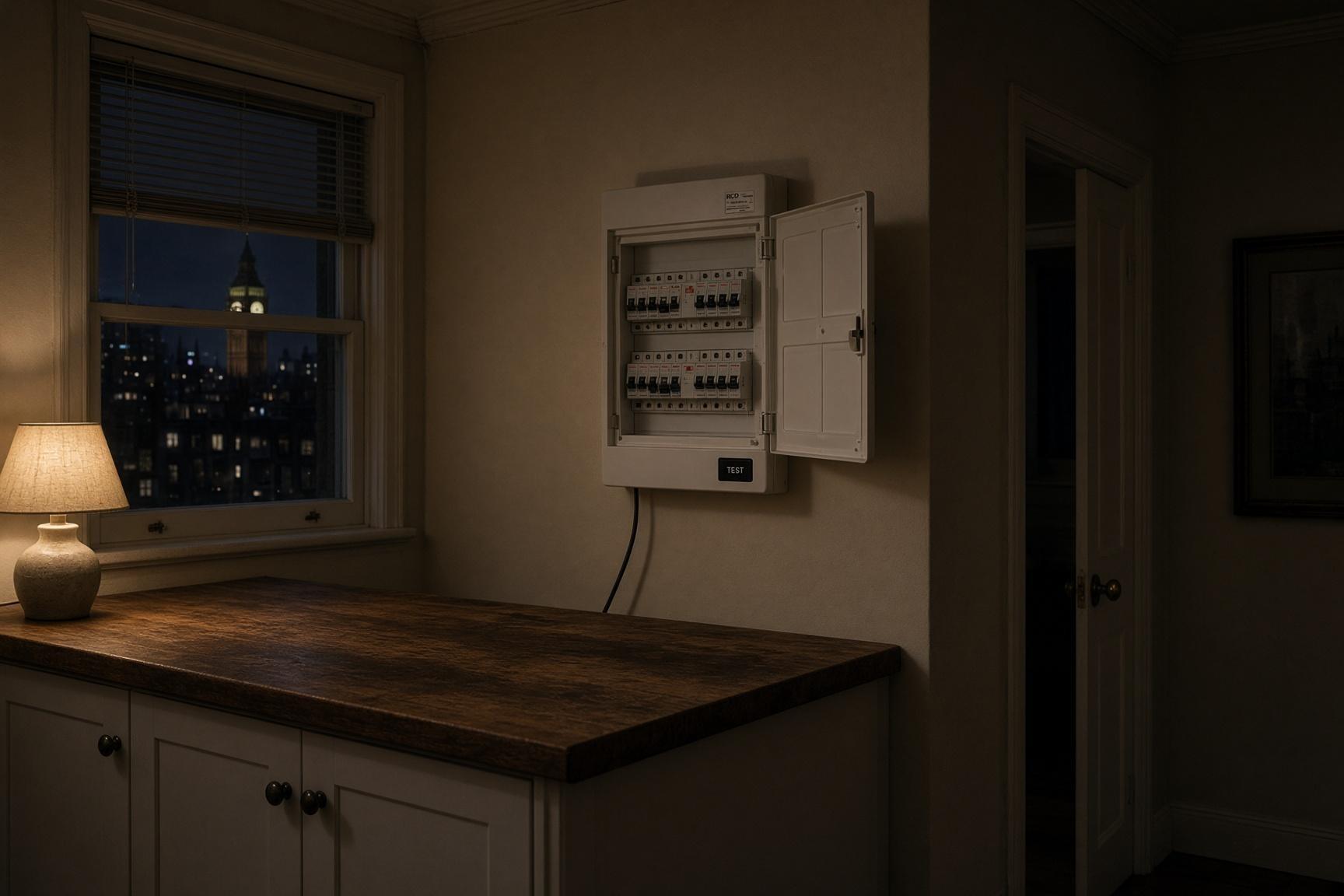
- distribution boards and consumer units
- circuit breakers and protective devices
- socket outlets
- light fittings and other fixed electrical equipment
- earthing and bonding arrangements
- residual current devices (RCDs)
- electrical accessories forming part of the fixed installation.
This combination of visual inspection and electrical testing helps identify issues that aren’t necessarily obvious during everyday use.
A socket might work perfectly well, for example, while a fault elsewhere in the circuit creates potential electric shock or electrical fire risks.
Who Can Issue an EICR Certificate for a Commercial Building?
A commercial EICR should be completed by a qualified electrician or electrical professional who is competent to undertake periodic inspection and testing for that particular installation.
Simply being able to carry out general electrical work doesn’t automatically demonstrate competence to inspect a complex commercial installation.
The person carrying out the EICR should have appropriate qualifications for periodic inspection and testing, an up-to-date understanding of the UK Wiring Regulations and relevant experience with commercial fixed-wire systems.
The UK’s electrical installation standard is BS 7671, commonly known as the IET Wiring Regulations. The inspector therefore needs sufficient knowledge to assess the installation against applicable electrical safety standards.
For commercial properties, we would look for evidence of:
- recognised inspection and testing qualifications
- knowledge of the current requirements of BS 7671
- documented experience with similar commercial electrical installations
- competence using appropriate specialist testing equipment
- experience interpreting test results and classification codes
- suitable insurance for electrical inspection and testing
In other words, you’re looking for a competent electrician, not simply somebody capable of filling out an EICR report.
Does an Electrician Have to Be NICEIC Registered to Issue an EICR?
This is a common misconception.
An electrician does not automatically have to be NICEIC registered simply to issue an EICR. The fundamental requirement is competence for the work being undertaken.
However, using an electrician or electrical contractor registered with a recognised industry body such as NICEIC or NAPIT provides useful additional evidence that their work and competence are subject to independent assessment.
NICEIC was historically known as the National Inspection Council for Electrical Installation Contracting, which is why you may still see that terminology when researching electricians.
For commercial property owners, landlords and facilities managers, recognised accreditation can provide valuable reassurance. Some insurers, contracts or clients may also specify that electrical work or testing is carried out by contractors registered with an approved industry body, so it’s worth checking your individual requirements before booking.
TNS Electrical Solutions is NICEIC approved, and our team has experience across commercial electrical services and electrical inspection work throughout London.
Why Commercial EICR Experience Is So Important
Consider the difference between inspecting a two-bedroom flat and a large commercial space.
The flat may have one consumer unit and a relatively small number of circuits.
A commercial building could have several distribution boards, three-phase electrical systems, machinery, server equipment, specialist installations and hundreds of electrical accessories.
The electrician may also have to work around employees, tenants, customers or equipment that cannot simply be switched off.
That’s why competence needs to match the installation.
A commercial EICR involves more than turning up with a tester and completing a checklist. The electrician needs to understand the property’s electrical systems, decide how the inspection can be carried out safely and plan any necessary isolation to minimise disruption.
We’ve learnt from working in commercial properties that planning is often just as important as the testing itself.
What Happens During Commercial EICR Testing?
Although the exact process depends on the building and agreed extent of the inspection, EICR testing generally combines a thorough visual inspection with dead and live electrical testing.
You may hear the process described broadly in four stages:
1. Visual Inspection
The electrician examines accessible parts of the property’s fixed electrical installation for visible damage, deterioration, incorrect installation and other safety risks.
2. Dead Testing
With appropriate circuits safely isolated, tests can be performed to assess matters such as continuity and insulation resistance.
3. Live Testing
Live tests can assess characteristics of the electrical installation that cannot be confirmed while circuits are isolated.
4. RCD Testing
Where residual current devices are installed, appropriate testing helps establish whether they operate as required.
The precise testing procedure depends on the installation. This is another reason an EICR needs to be undertaken by a suitably qualified and competent person rather than treated as a basic visual check.
What Do C1, C2, C3 and FI Mean on an EICR Report?
Following the inspection and testing, observations are classified using standard codes.
C1: Danger present
This indicates an immediate risk where prompt action is required to make the situation safe.
C2: Potentially dangerous
A C2 identifies a condition that could present a safety risk and requires urgent remedial work.
C3: Improvement recommended
A C3 doesn’t normally make an installation unsatisfactory by itself. Instead, an improvement is recommended to enhance electrical safety.
FI: Further investigation required
This means further investigation is needed without delay because the inspector cannot determine the full extent or cause of a potential problem during the initial inspection.
C1 and C2 observations result in an unsatisfactory EICR and require remedial attention. FI also requires further investigation.
We’ve explained these classifications in more detail in our guide to C1, C2, C3 and FI electrical codes.
Once necessary remedial work has been completed and appropriately documented, you’ll have evidence that the identified electrical hazards have been addressed.
Is an EICR a Legal Requirement for Commercial Properties?
This needs a little nuance because you’ll find plenty of conflicting answers online.
There isn’t a blanket rule stating that every commercial building must have an EICR every five years.
However, employers and dutyholders have legal responsibilities for electrical safety. The Electricity at Work Regulations 1989 require electrical systems to be maintained, so far as reasonably practicable, to prevent danger.
Periodic inspection and testing is an established way of assessing the condition of electrical installations and demonstrating an appropriate approach to electrical safety compliance.
Requirements can also arise through:
- commercial leases
- insurance policies
- licensing arrangements
- contractual obligations
- risk assessments
- requirements applying to a particular type of premises
So, is an EICR a legal requirement? The answer depends on the circumstances rather than a single rule applying identically to every commercial property.
What About Landlords and the Five-Year Rule?
This is where commercial and residential requirements are sometimes confused.
In England’s regulated rented residential sector, landlords are subject to specific requirements for inspection and testing at least every five years. Those regulations also contain requirements concerning providing reports to tenants and local authorities.
Those residential landlord rules should not automatically be applied to an ordinary commercial lease.
With commercial premises, responsibility for electrical safety, testing and remedial work can also be affected by the terms of the lease. Depending on the agreement, a commercial landlord or tenant may be responsible for particular parts of the installation.
Never assume that “the tenant is always responsible” or that “landlords retain responsibility” in every commercial lease. Check the lease and seek appropriate professional advice where responsibility isn’t clear.
How Often Should a Commercial EICR Be Carried Out?
You’ll often see five years quoted as a typical maximum interval for many commercial installations, but EICR frequency should not be treated as a universal rule.
The recommended date for the next periodic inspection depends on factors including:
- the type of commercial premises
- age and condition of the installation
- how heavily the electrical systems are used
- environmental conditions
- previous EICR findings
- changes made to the installation or use of the building
Some commercial spaces may require more frequent inspections because the electrical equipment or installation is exposed to more demanding conditions.
The EICR report should state when the next inspection is recommended. Keeping an up-to-date EICR, alongside records of electrical work and previous inspections, also makes it easier to monitor deterioration over time.
How Much Does a Commercial EICR Cost?
There’s no sensible fixed price for every commercial building.
As a rough market guide, a relatively small commercial EICR may cost around £250 to £500, while larger or more complex properties can cost considerably more.
The final cost depends on factors such as:
- property size
- number of circuits
- number of distribution boards
- complexity of the electrical installation
- access
- three-phase or specialist systems
- required testing arrangements
- whether testing needs to take place outside normal working hours
Commercial EICRs usually cost more than domestic inspections simply because there can be considerably more to inspect and test.
For landlords or businesses managing several commercial properties, it’s also worth asking whether efficiencies are possible when arranging multiple inspections together.
Rather than choosing solely on the lowest price, we’d recommend asking exactly what’s included in the inspection.
How Long Does an EICR Inspection Take?
Again, the building determines the answer.
You may see estimates ranging from 30 minutes to three hours online, but that is not a reliable expectation for all commercial EICRs. A detailed commercial inspection can take considerably longer depending on the number of circuits, distribution boards, access requirements and complexity of the installation.
For larger commercial buildings, testing may need to be planned in stages or around operating hours.
If someone promises an extremely quick inspection of a substantial commercial installation without first understanding what’s involved, that’s worth questioning.
How Do I Choose the Right Electrician for a Commercial EICR?
Before booking, ask a few straightforward questions:
- Are you qualified for periodic inspection and testing?
- Do you regularly carry out EICRs in commercial buildings like mine?
- Are you NICEIC, NAPIT or otherwise appropriately registered?
- Do you have experience with this type of electrical installation?
- How will you minimise disruption during testing?
- What does your quotation include?
- How will any C1, C2, C3 or FI observations be explained?
- Can you undertake remedial work if electrical faults are discovered?
A professional electrician should be happy to answer these questions.
Choosing a Competent Electrician for Your Commercial EICR
So, who can issue an EICR certificate for a commercial building?
The key requirement is a qualified and competent person with appropriate inspection and testing knowledge and experience for the commercial electrical installation involved. NICEIC or NAPIT registration isn’t the sole legal test of whether someone can issue an EICR, but recognised accreditation provides useful evidence when assessing a contractor.
At TNS Electrical Solutions, we know an EICR isn’t just paperwork. A proper inspection can uncover potential electric shock risks, electrical fires, deteriorated wiring and other electrical hazards before they develop into more serious problems.
As NICEIC-approved electrical contractors, we provide commercial EICR inspections in London, alongside commercial property maintenance and wider electrical services.
If you’re unsure whether your commercial property needs an EICR, when the next inspection is due or what an existing report means, getting advice from a competent commercial electrician is the safest place to start.
Disclaimer
This article provides general information about EICRs and electrical safety in commercial properties in England. It is not legal, regulatory or site-specific electrical advice. Responsibilities and inspection requirements can vary according to the property, its use, lease arrangements, insurance requirements and applicable legislation. Check current HSE, government and BS 7671 requirements and seek advice from an appropriately qualified professional where necessary.