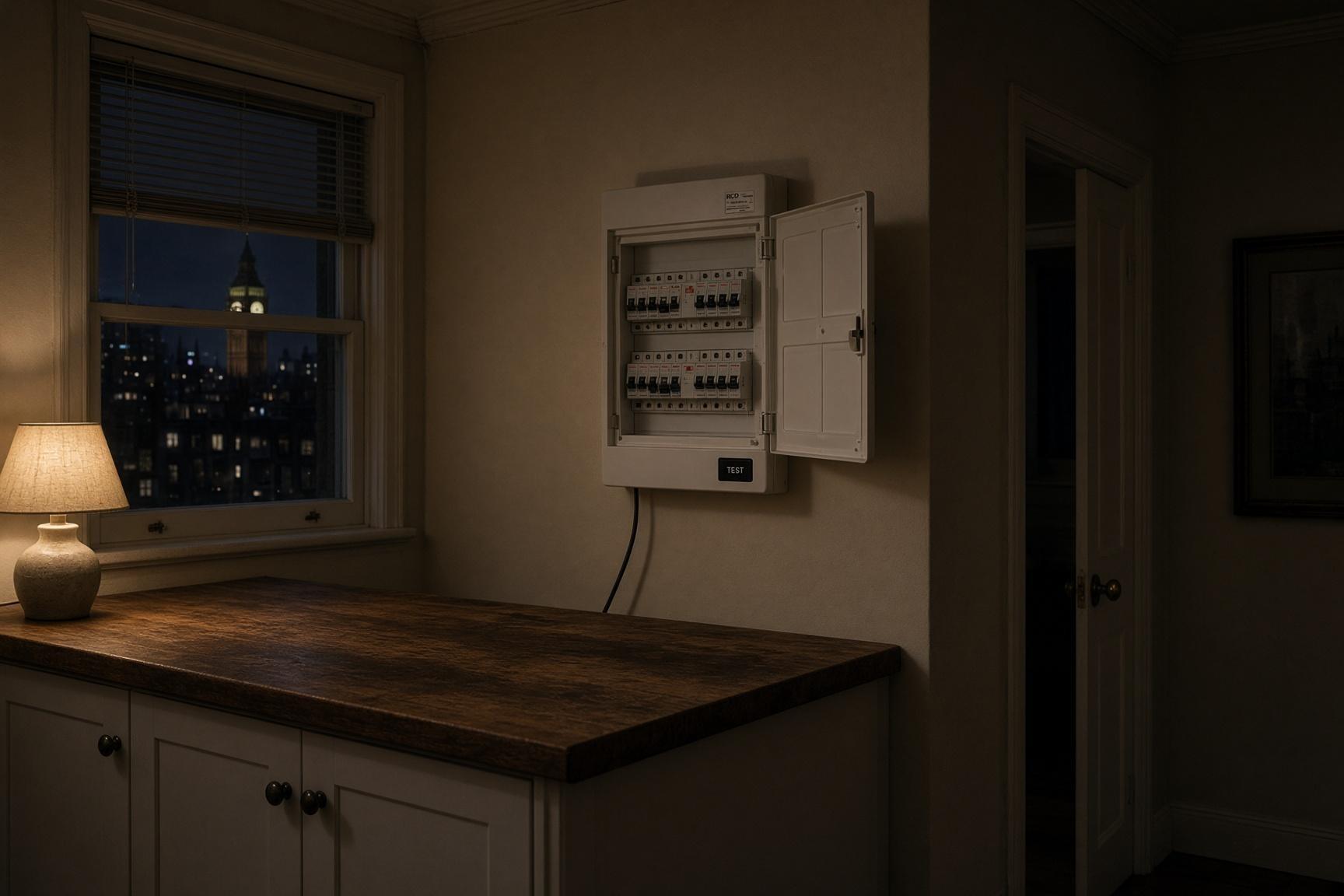
Quick Answer: A surge protection device (SPD) can help protect your home’s electrical installation and sensitive electronics from sudden voltage spikes. Whether you need one depends on your property’s electrical system, the potential consequences of a surge and the applicable UK wiring regulations.
If you’re considering a surge protection device in the UK, particularly during a house rewire or consumer unit upgrade, understanding the benefits can help you make an informed decision.
At TNS Electrical Solutions, we help homeowners across London with electrical inspections, rewiring and consumer unit upgrades. Here’s what you need to know about domestic surge protection and when professional advice is worthwhile.
What Is a Surge Protection Device and How Does It Work?
A surge protection device is an electrical safety component designed to limit short-duration voltage spikes, known as transient overvoltages. It helps protect connected electrical equipment by diverting surge current away from sensitive circuits and limiting the voltage that reaches them.
Under normal operating conditions, an SPD has little effect on your electricity supply. When a transient overvoltage occurs, the device responds rapidly, helping reduce the voltage reaching connected equipment.
An appropriately specified SPD can help protect:
- Televisions, computers and home entertainment systems.
- Routers, Wi-Fi equipment and smart home devices.
- Boilers, heating controls and electronic thermostats.
- Washing machines and other appliances with electronic controls.
- Home office equipment and sensitive electronics.
However, an SPD does not guarantee protection against every electrical fault or lightning strike.
It also performs a different function from a circuit breaker or residual current device (RCD). Circuit breakers protect against excessive current, while RCDs provide protection against certain electric shock and earth fault risks. SPDs specifically address transient overvoltages.
What Causes a Power Surge in a House?
Power surges can result from lightning activity, electrical switching operations and disturbances affecting the electricity supply. These events can create brief increases in voltage that may damage sensitive electronic components, even when the surge is too short for occupants to notice.
Lightning strikes and atmospheric activity
Lightning does not need to strike your home directly to create a surge.
Indirect lightning strikes can induce transient overvoltages in nearby power lines and other incoming services. These disturbances may travel through the electrical supply and affect equipment inside a property.
Properties supplied by overhead power lines may require particular attention when assessing lightning-related risks.
Switching surges and electrical equipment
Electrical switching can also generate transient overvoltages.
Motors, transformers and other electrical equipment can generate transient overvoltages during switching operations. These disturbances may originate within a home’s electrical installation or elsewhere on the electricity distribution network.
Modern appliances, including speed-controlled washing machines and electronic heating systems, contain components that may be sensitive to electrical disturbances.
Can a power cut cause a surge?
A power cut does not automatically cause a damaging surge. However, switching operations associated with interruptions and restoration of supply can sometimes create transient overvoltages.
If sensitive electronic equipment appears damaged following supply disturbances, the effect may involve either instant failure or faults that only become apparent over a longer period, so arrange an electrical assessment.
These symptoms do not necessarily prove that a surge occurred. Faulty wiring, loose connections and other electrical problems may produce similar warning signs.
Do I Need a Surge Protection Device in My Home Under UK Regulations?
Surge protection requirements in UK homes depend on the electrical installation, the potential consequences of transient overvoltages and BS 7671. SPDs are required in certain circumstances, while other installations may allow an informed decision about accepting the risk. Existing homes do not automatically require retrospective upgrades solely because newer wiring requirements have been introduced.
The IET Wiring Regulations, BS 7671, establish the national standard for electrical installation design and safety.
As of October 2026, the current edition is BS 7671:2018+A4:2026, following the end of the previous edition’s transition period on 15 October 2026.
Section 443 addresses protection against transient overvoltages, while Section 534 covers the selection and installation of SPDs.
Surge protection is particularly important where overvoltage could result in serious injury, loss of life or significant financial or data loss. In other situations, the relevant provisions allow the property owner to make an informed decision about tolerating potential damage and consequential loss.
This decision should follow appropriate professional advice rather than an assumption that surge protection is unnecessary.
For authoritative guidance, refer to the Institution of Engineering and Technology’s surge protection guidance and its current BS 7671 edition information.
Is surge protection required in new-build homes?
New electrical installations must be designed and assessed against the applicable edition of BS 7671.
For a new-build home, the electrician should establish the relevant surge protection requirements during the design stage, including whether any permitted owner declaration is appropriate.
Should I install surge protection when rewiring my house?
A full house rewire provides a practical opportunity to incorporate an SPD into the electrical installation.
The electrician can assess the supply arrangement, earthing system, consumer unit and equipment requiring protection before selecting an appropriate device.
Including surge protection during planned electrical work may be more convenient than arranging a separate installation later.
Is an SPD necessary when replacing a consumer unit?
A consumer unit replacement should include consideration of surge protection under the current wiring requirements.
The electrician must assess the work being undertaken and explain whether an SPD is required or recommended.
An existing installation does not necessarily need every component replaced simply because newer standards have been published.
What Are the Different Types of Surge Protection Devices?
There are three principal SPD classifications used across domestic, commercial and industrial electrical installations: Type 1, Type 2 and Type 3. Each provides protection at a different point in an electrical installation, and the correct selection depends on the property’s supply arrangement, exposure to lightning-related surges, the range of devices available for different installation needs, and equipment requiring protection.
Type 1 surge protection devices
Type 1 SPDs are designed to handle high-energy surge currents associated with lightning protection requirements.
They are typically installed near the origin of an electrical installation where the design calls for this level of protection.
Type 2 surge protection devices
Type 2 SPDs are commonly used in domestic electrical distribution systems.
They limit transient overvoltages, protect against residual surges from switching operations, and are frequently installed at the consumer unit, distribution board, or sub distribution boards.
Combined Type 1 and Type 2 devices are also available where appropriate.
Type 3 surge protection devices
Type 3 SPDs provide additional protection close to sensitive equipment.
Examples include suitable plug-in surge protectors designed to complement upstream protection.
Type 3 devices should not be treated as a substitute for an appropriately designed whole-installation protection system.
Where several SPDs are installed, their coordination must be considered, and compatibility between devices from different manufacturers should be checked to ensure correct operation.
Is Whole-House Surge Protection Better Than Plug-In Surge Protectors?
Whole-house surge protection often provides better protection because an SPD installed at the consumer unit can limit excess voltage at the installation level before it reaches appliances. Plug-in surge protectors generally protect only connected equipment and may be useful as supplementary protection for particularly sensitive devices.
For example, a homeowner may use a consumer unit SPD alongside a suitable plug-in device for a computer or home entertainment system.
The two approaches serve different purposes:
- Consumer unit SPD: Helps protect multiple circuits and connected equipment across the installation.
- Plug-in surge protector: Provides additional protection for equipment connected to that particular outlet.
- Coordinated protection: Uses appropriately selected devices at different points to improve protection for sensitive equipment and support long-term safety.
Neither arrangement guarantees complete protection against direct lightning strikes, sustained overvoltage, faulty wiring or every possible electrical disturbance.
Where incoming telephone lines, data cables or other services are present, an electrician may also need to consider surge protection for those pathways.
Can a Surge Protection Device Be Added to an Existing Consumer Unit?
Yes, an SPD can often be added to an existing consumer unit, provided there is sufficient space and the equipment is suitable for the installation. Where the consumer unit cannot accommodate the device, an electrician may be able to install a suitable separate enclosure nearby.
Before installation, the electrician should inspect the existing equipment and establish:
- Whether the consumer unit has adequate space.
- Whether the SPD is compatible with the equipment and manufacturer’s instructions.
- Whether the earthing and bonding arrangements are suitable.
- What associated protective devices and connections are required.
- Whether any existing electrical defects need attention.
An SPD should be installed by a qualified electrician who can safely isolate, inspect, connect and test the installation.
Homeowners should not attempt to fit one inside a live consumer unit.
How Much Does Surge Protection Device Installation Cost in the UK?
The cost of installing a surge protection device in a UK home depends on the device required, the existing consumer unit, the electrical installation’s condition and the amount of additional work involved. A straightforward installation into a compatible consumer unit will usually involve less work than a project requiring a new enclosure or consumer unit replacement.
Several factors influence the quotation.
Type and specification of the SPD
Different SPD types have different capabilities and installation requirements.
A property requiring coordinated protection across several distribution boards or incoming services may need a more complex arrangement.
Size and condition of the electrical installation
A small domestic installation with a modern consumer unit may be relatively straightforward to assess.
An older property with outdated equipment, limited space or electrical defects could require additional work before an SPD can be fitted.
Installation during other electrical work
Surge protection may be easier to incorporate during a planned rewire, refurbishment or consumer unit upgrade.
Combining the work can avoid arranging separate visits, although the total cost still depends on the installation.
Testing and associated work
The quotation should account for the electrician’s labour, necessary components, appropriate inspection and testing, and any required certification.
Rather than relying on a generic installation price, request a property-specific quotation explaining the recommended protection and any associated electrical work.
How Long Does SPD Installation Take?
SPD installation may be completed during a relatively short electrical visit when the existing consumer unit is suitable and no significant remedial work is required. However, the total time depends on the installation’s condition, access, device compatibility and any additional work identified during inspection.
A consumer unit replacement or extensive rewiring project will naturally take longer.
An electrician should explain the expected disruption and any necessary interruption to the electricity supply before work begins.
How Do I Know If My House Already Has Surge Protection?
You may be able to identify an SPD by checking whether your consumer unit contains a labelled surge protection module. Many devices include status indicators showing whether their protective function remains operational, although the exact display varies between manufacturers.
Look for markings such as “SPD” or “Surge Protection”.
Some devices use coloured status windows as part of those indicators, but you should always follow the manufacturer’s instructions rather than assuming that a particular colour means the device is working.
Do not remove the consumer unit cover to investigate.
If you’re unsure whether your property has surge protection, ask a qualified electrician to check during an electrical inspection.
Do surge protection devices need replacing?
SPDs can deteriorate after repeated exposure to transient overvoltages or following a significant surge event. Their service life varies depending on the device, installation conditions and exposure to surges. A qualified electrician can assess whether replacement is necessary.
Some models have replaceable protective modules, while others may require replacement of the complete device.
A failed status indicator should be investigated promptly by a qualified electrician.
regular inspections should include checking the device’s status indicators, looking for visible wear or damage, and confirming its condition to see whether further attention is required.
Is Whole-House Surge Protection Worth It?
Whole-house surge protection can be worthwhile for homeowners who rely on expensive electronics, smart home systems, computers and electronically controlled appliances, especially in homes with more advanced electrical systems and costly devices. Although an SPD cannot eliminate every electrical risk, it can reduce the likelihood of damage caused by certain transient overvoltages.
Consider how much equipment your home depends on.
A typical property may contain televisions, computers, internet routers, heating controls and appliances with electronic circuit boards.
Avoiding damage can matter in domestic, commercial and similar settings where replacement costs, lost data or equipment downtime disrupt everyday activities.
For people working from home, damage to computers or networking equipment may be particularly inconvenient.
Surge protection can also be relevant to properties with electric vehicle charging equipment and other modern electrical technologies.
Whether the investment is justified depends on the value and importance of the equipment, the electrical installation and the risks involved.
Home insurance may cover some forms of surge damage, but policies differ. Check your insurer’s terms rather than assuming every incident will be covered.
Frequently Asked Questions
Should every house have surge protection?
Not every existing house must automatically be retrofitted with an SPD. However, surge protection should be assessed against the applicable BS 7671 requirements, and it may offer worthwhile protection for modern domestic electrical installations.
Can I install a surge protection device myself?
SPD installation within a consumer unit should be carried out by a qualified electrician. Incorrect installation can create serious electrical hazards and compromise the intended protection.
Can a surge protection device protect against lightning?
An appropriately designed SPD system can reduce the effects of certain lightning-related transient overvoltages. It cannot guarantee protection against every direct lightning strike, and some properties may require a more comprehensive lightning protection arrangement.
Does a surge protector protect against faulty wiring?
No. An SPD is not designed to repair or compensate for defective wiring, loose connections, overloaded circuits or inadequate earthing. These problems require appropriate electrical inspection and remedial work.
Get Professional Advice on Surge Protection in London
If you’re planning a consumer unit upgrade, renovating your property or arranging electrical work, it’s worth discussing surge protection with a qualified electrician.
At TNS Electrical Solutions, we provide electrical services for homeowners and landlords across London, including consumer unit work, rewiring, electrical inspections and fault finding.
We serve areas including Fulham, Hammersmith, Chiswick, Ealing, Putney, Wandsworth, Chelsea, Kensington and surrounding parts of West and South West London.
Our team can discuss your existing installation and the electrical work you’re considering, helping you understand what assessment may be needed before deciding on surge protection.
Contact TNS Electrical Solutions to discuss your requirements and request a quotation.
Disclaimer: This article provides general information about domestic electrical surge protection and UK wiring requirements. It is not a substitute for a property-specific electrical assessment. Electrical installation work should be assessed and undertaken by a suitably qualified professional in accordance with the applicable regulations and manufacturer’s instructions.