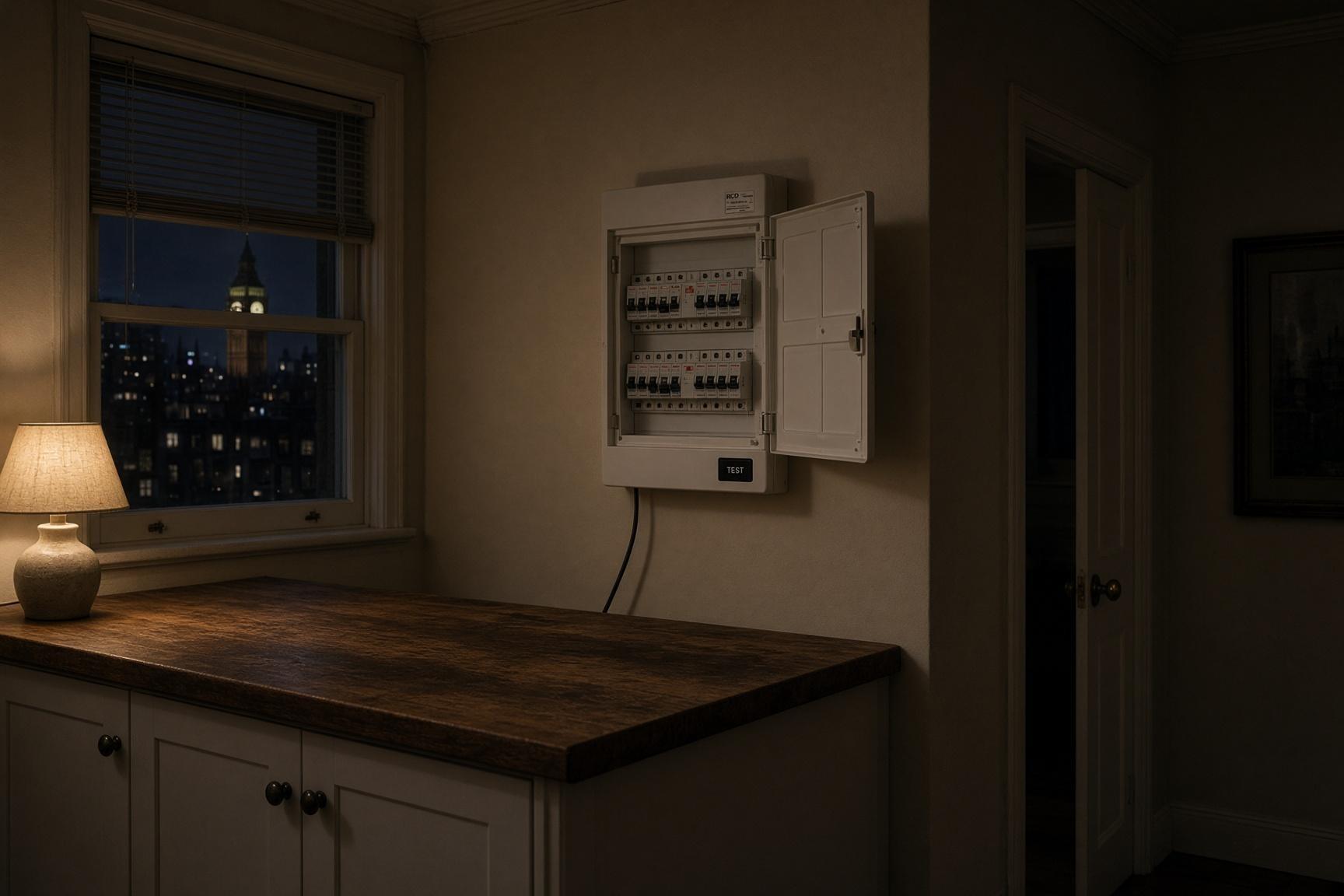
Quick Answer: If your circuit breaker keeps tripping, it usually means the electrical system has detected an overload or fault and is switching the circuit off for safety. Common causes include an overloaded circuit, faulty appliance, short circuit, earth fault or damaged wiring. If the breaker repeatedly trips, will not reset or trips immediately after resetting, a qualified electrician should investigate the underlying cause.
If your circuit breaker keeps tripping, the electrical system is usually responding to an overload or fault on the affected circuit. Common causes include too many appliances drawing power at once, a faulty appliance, damaged wiring, a short circuit or an earth fault. Resetting a breaker once may restore power, but repeated tripping should be investigated rather than repeatedly reset.
A circuit breaker is a safety device, so a breaker that keeps switching off is doing something important: interrupting the electrical supply when abnormal conditions are detected.
For homeowners, tenants, landlords and property managers, the priority is therefore not simply getting the electricity back on. It is establishing why the breaker keeps tripping and whether professional electrical fault finding is needed.
Why Does My Circuit Breaker Keep Tripping?
A circuit breaker repeatedly trips when the electrical conditions on its circuit cause the protective device to operate. An overloaded circuit is one possible cause, but repeated tripping can also result from a faulty appliance, damaged wiring, a short circuit or another electrical fault. The pattern of the tripping can provide useful clues about the underlying problem.
Some of the most common causes include:
An overloaded electrical circuit
An electrical circuit is designed to operate within specified limits. Connecting or operating too much equipment on the same circuit can create an overload.
This may happen when several high-powered appliances are used simultaneously, particularly through the same group of sockets or extension leads.
Electrical Safety First warns against overloading socket outlets and recommends avoiding practices such as connecting one extension lead to another.
If the breaker trips only when several appliances are running at once, the electrical load may therefore be relevant. However, repeated overloads should not simply be treated as an inconvenience. An electrician can assess whether the circuit and installation are appropriate for the way the property is being used.
A faulty electrical appliance
If the circuit breaker trips when an appliance is turned on, that appliance may have developed a fault.
Kettles, washing machines, ovens, electric showers, heaters and other appliances can all develop electrical problems. Damage may affect an appliance’s internal components, cable or plug.
A useful clue is consistency. If the electrics operate normally until one particular appliance is connected or switched on, stop using that appliance until the problem has been properly investigated.
Do not repeatedly reconnect equipment that appears to trigger the fault.
A short circuit or wiring fault
Damaged or faulty wiring can create more serious electrical problems. A short circuit involves current flowing along an unintended low-resistance path, potentially causing a high fault current and the protective device to operate.
Loose connections, deteriorated cables and damage to electrical accessories can also contribute to electrical faults.
These problems generally require professional testing because the faulty wiring may be concealed within walls, floors or the consumer unit.
An earth fault or earth leakage
An earth fault occurs when electrical current flows along an unintended path towards earth. Depending on the installation and protective devices fitted, this can cause an RCD or RCBO to operate.
Moisture, damaged cables, defective appliances and faults within fixed electrical equipment are among the issues an electrician may investigate when dealing with repeated RCD tripping.
Why Does the Breaker Trip When I Turn Something On?
If a breaker trips whenever a particular appliance or piece of equipment is switched on, the appliance itself or the circuit supplying it may have a fault. Stop using the item if the same behaviour happens repeatedly. An electrician or appropriate appliance repair professional can then determine whether the equipment, socket, wiring or circuit is responsible.
The timing can help narrow down the problem.
For example, if a breaker trips when a kettle is switched on but remains stable with other appliances, the kettle becomes an obvious item to investigate. If multiple high-load appliances cause the breaker to operate only when used together, circuit loading may instead be contributing.
Problems involving fixed equipment require additional care. If a breaker trips whenever an oven, electric shower or heating system operates, avoid attempting to dismantle or repair the equipment yourself.
Electrical Safety First advises people not to ignore circuit breakers that trip and to seek qualified assistance where an electrical product appears faulty.
Why Does My Circuit Breaker Trip When Nothing Is Plugged In?
A circuit breaker that trips when nothing appears to be plugged in can indicate a problem with fixed wiring, lighting, hard-wired equipment, the consumer unit or another part of the circuit that is not immediately visible. Unplugging portable appliances does not isolate every possible source of an electrical fault.
Remember that many electrical loads are permanently connected rather than plugged into ordinary sockets.
Depending on the property, these can include:
- lighting circuits;
- ovens and hobs;
- electric showers;
- boilers and heating controls;
- extractor fans;
- outdoor electrical equipment; and
- other hard-wired appliances.
A circuit that continues to trip after obvious portable appliances have been disconnected therefore needs proper fault finding rather than repeated resetting.
Why Does My Circuit Breaker Trip Randomly or at Night?
Apparently random circuit-breaker trips often have a trigger that is not immediately obvious. Timed heating, refrigeration equipment, exterior lighting, boilers, pumps or appliances operating automatically can switch on without someone manually using them. Intermittent wiring or moisture-related faults can also make the pattern difficult to identify without testing.
Keeping a simple record can be useful.
Note the time the circuit trips, which breaker or RCD operates and which appliances or systems were running. For example, repeated night-time tripping that coincides with heating or timed exterior equipment gives an electrician useful diagnostic information.
Do not remove consumer-unit covers or expose wiring while trying to find the cause.
What Is the Difference Between an RCD and a Circuit Breaker?
A circuit breaker such as an MCB primarily protects a circuit against excessive current caused by conditions such as overloads and short circuits. An RCD monitors for an imbalance in current that can indicate leakage to earth and provides important protection against electric shock. Modern consumer units may also contain RCBOs combining functions in one device.
This distinction matters because people often say that their “fuse box keeps tripping” without knowing which protective device has actually operated.
If an RCD keeps tripping, the fault may affect an appliance or one of several circuits protected by that RCD. If an individual MCB keeps tripping, the investigation may initially focus more closely on that particular circuit.
You do not need to diagnose the protective device yourself, but telling an electrician which switch has moved to the off or tripped position can help with initial fault finding.
What Can I Safely Check Myself?
You can visually check which protective device has tripped and, where it is safe to do so, disconnect portable appliances that may be associated with the problem. You can also check whether the fault consistently appears when particular equipment is used. Do not remove covers, dismantle sockets, access internal consumer-unit components or work on fixed wiring.
If there are no signs of damage, burning, overheating or another immediate hazard, a breaker may sometimes be reset once in accordance with the manufacturer’s instructions.
If it trips immediately after reset, will not stay on or repeatedly switches off, stop resetting it and arrange professional investigation.
You should also stop using an appliance if switching it on repeatedly causes the circuit to trip.
Electrical Safety First advises consumers not to ignore warning signs including burn marks, buzzing or crackling, hot plugs or sockets and circuit breakers that keep tripping.
When Should I Call an Electrician for a Tripping Circuit?
Call a qualified electrician when a circuit repeatedly trips, a breaker will not reset, the cause cannot be isolated to a portable appliance, or there are other signs of an electrical fault. Burning smells, scorching, unusual heat, sparking or exposed wiring warrant particularly urgent attention because continuing to use the affected installation could create additional risk.
Professional assessment is also sensible when:
- one circuit or room repeatedly loses power;
- sockets or lights keep tripping;
- the breaker trips immediately after being reset;
- an RCD repeatedly trips;
- a kitchen or bathroom circuit keeps switching off;
- fixed equipment such as an oven or shower triggers the fault;
- there are signs of damaged or deteriorated wiring; or
- the consumer unit itself appears damaged.
TNS Electrical Solutions provides residential electrical repairs, fusebox repairs, EICRs and emergency electrical services across Fulham and surrounding areas of London. The company’s website also identifies TNS as a NICEIC Approved Contractor.
How Does an Electrician Find a Tripping-Circuit Fault?
Electrical fault finding involves systematically testing the installation to identify the affected circuit and determine what is causing the protective device to operate. Depending on the symptoms, an electrician may assess the consumer unit, circuit condition, connections, fixed equipment and appliances before carrying out appropriate electrical tests.
The exact process depends on the fault.
A straightforward faulty appliance may be identified relatively quickly. An intermittent problem involving concealed wiring, several circuits or multiple connected loads can require more investigation.
Once the source has been established, the appropriate solution might involve repairing damaged wiring, correcting a connection, replacing a defective component or dealing with faulty equipment. A consumer unit should not automatically be replaced simply because a circuit has tripped.
For landlords, repeated electrical faults may also need to be considered alongside the property’s wider electrical-safety obligations. In England, applicable rented properties must have their electrical installations inspected and tested by a qualified person at least every five years, with the resulting report commonly known as an EICR.
Does a Circuit That Keeps Tripping Mean I Need a New Consumer Unit?
No. Repeated circuit-breaker tripping does not automatically mean that the consumer unit needs replacing. The protective device may simply be responding correctly to a fault elsewhere in the electrical installation. Testing is needed to establish whether the problem lies with an appliance, circuit, wiring, breaker or the consumer unit itself.
An older or damaged fuse board may justify further assessment, particularly where appropriate modern protection is absent or components are defective.
However, replacement should follow diagnosis rather than guesswork.
A qualified electrician can inspect and test the installation and explain whether a repair, protective-device replacement, consumer-unit work or another solution is appropriate.
How Much Does Electrical Fault Finding Cost in London?
The cost of electrical fault finding depends on how quickly the fault can be identified, the number of circuits involved, accessibility, the condition of the installation and whether components or wiring require repair or replacement. Intermittent faults can take longer to diagnose than a problem that occurs consistently under easily reproduced conditions.
Other cost factors include whether emergency attendance is required, whether the fault involves fixed equipment and whether remedial work can be completed during the initial visit.
TNS currently publishes a standard call-out rate of £100 + VAT per hour on some of its London location pages, including attendance and the first hour on site, and an urgent rate of £120 + VAT per hour for its stated emergency service. Confirm the applicable rate with TNS when booking, as pricing and the work required can vary.
A diagnosis should come before assumptions about expensive replacement work. Until the fault has been tested, it is impossible to say reliably whether the solution will be a minor repair or more extensive electrical work.
Get a Circuit That Keeps Tripping Professionally Checked
A circuit breaker that operates once may be responding to a temporary overload, but repeated tripping can indicate an underlying electrical fault. Faulty appliances, overloaded circuits, damaged wiring, short circuits and earth faults are all possibilities, and the symptoms alone do not always reveal which one is responsible.
TNS Electrical Solutions provides electrical fault finding and repairs for homeowners, landlords, tenants and property managers in Fulham and across London, including surrounding West and South West London areas.
If your breaker will not stay on, an RCD repeatedly trips or part of your property keeps losing power, arrange an electrical assessment rather than repeatedly resetting the protective device.
Safety disclaimer: This article provides general information and is not a substitute for an electrical inspection or professional advice about a specific installation. Do not dismantle a consumer unit, socket, fixed appliance or electrical wiring unless you are appropriately qualified and competent. If you notice burning smells, smoke, sparking, exposed live parts or signs of overheating, stop using the affected equipment or circuit where this can be done safely and seek professional assistance.