Quick Answer: A burning smell from a socket usually indicates overheating or an electrical fault, such as a loose connection, damaged wiring, a faulty socket or a problem with the connected plug or appliance. Stop using the affected socket immediately. If it feels hot, has scorch marks, buzzes, crackles or smells burnt even with nothing plugged in, arrange for a qualified electrician to investigate it.
A burning smell from a socket can indicate overheating, a loose electrical connection, damaged wiring, a faulty socket or a problem with the appliance or plug connected to it. Stop using the affected socket and arrange professional investigation if the cause is unclear. Burning smells accompanied by heat, scorch marks, buzzing, crackling, melting or repeated tripping require particularly prompt attention.
Electrical Safety First advises people not to ignore burn marks, arcing sounds such as buzzing or crackling, sockets that feel hot, blown fuses or circuit breakers that keep tripping.
A socket does not have to produce smoke or flames for an electrical fault to be present. Heat can develop around socket contacts, terminals, plugs or electrical wiring before more obvious damage appears.
Is a Burning Smell From a Socket Dangerous?
Yes, a burning smell from a socket can indicate a potentially dangerous electrical fault. The smell may be caused by overheating plastic or cable insulation, damaged electrical connections, arcing or another fault generating excessive heat. Continuing to use the affected socket could allow the damage to become worse.
Treat the problem particularly seriously if you notice:
- a hot socket and burning smell;
- black or brown marks around the socket;
- melted or distorted plastic;
- buzzing or crackling;
- sparks;
- a plug that smells burnt;
- repeated circuit-breaker or RCD trips; or
- smoke coming from the socket, plug or nearby wiring.
Electrical Safety First advises that sockets showing burn marks or becoming hot should be checked by a competent registered electrician.
A socket that still supplies electricity is not necessarily safe. An electrical connection can continue working while deteriorating and generating excessive heat.
What Should I Do If I Smell Burning From a Socket?
Stop using the affected socket immediately and disconnect the appliance if it is safe to do so. Do not keep switching the socket on to test whether the smell returns. Where there are signs of serious overheating, burning or an electrical fault, arrange for a qualified electrician to investigate the problem.
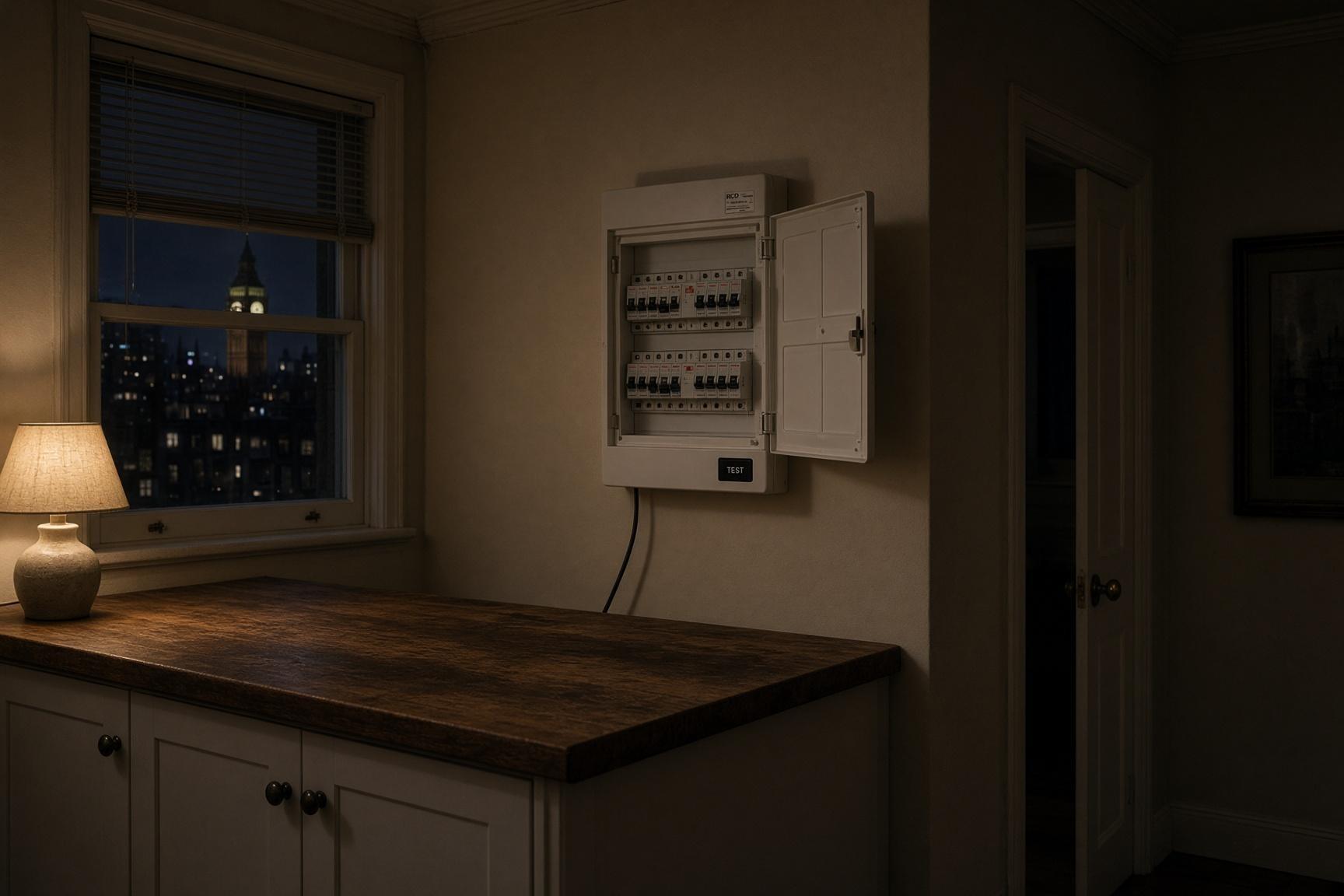
If you can safely identify and isolate the affected circuit at the consumer unit, switching it off can prevent further use while professional assistance is arranged. Do not touch damaged, melted or excessively hot components.
You should also avoid:
- dismantling the socket faceplate to investigate fixed wiring yourself;
- plugging another appliance into the socket to “test” it;
- repeatedly resetting an RCD or circuit breaker that continues to trip;
- continuing to use a burnt or melted plug; or
- covering up a burning smell with air freshener and assuming the problem has disappeared.
If there is an active fire, visible smoke or an immediate danger to people or property, leave the area and contact the emergency services.
What Causes a Burning Smell Coming From a Socket?
Common causes include a loose electrical connection, damaged socket contacts, overloaded equipment, a faulty appliance or plug, damaged wiring and electrical arcing. An electrician may need to test the socket and affected circuit because several different faults can produce similar symptoms.
Loose connections behind the socket
A loose electrical connection can increase resistance at a terminal or contact point. That resistance can generate localised heat, potentially damaging the socket and surrounding insulation.
Loose wiring behind a socket can also contribute to arcing. You may notice buzzing or crackling as well as a hot-plastic or electrical burning smell.
The problem cannot be reliably diagnosed simply by looking at the front of the socket. Fixed wiring and internal connections should be investigated by someone competent to work on the electrical installation.
A damaged or faulty socket
Socket contacts can deteriorate or become damaged. A plug that no longer sits securely, visible discolouration, scorching or melted plastic can indicate that the socket has suffered heat damage.
Replacing the socket may be necessary, but the underlying reason for the damage should also be established. Simply fitting another socket without determining why the first one overheated could leave the original electrical fault unresolved.
An overloaded socket or extension lead
Connecting excessive loads through an extension lead, adaptor or socket arrangement can cause overheating.
High-load appliances deserve particular care. Electrical Safety First warns against plugging too many appliances into a socket or extension lead, especially high-powered appliances such as kettles, irons and heaters.
Avoid daisy-chaining extension leads and never assume an extension lead is safe simply because every outlet can physically accept another plug.
A faulty appliance or plug
Sometimes the socket itself is not the only possible culprit.
If the burning smell occurs when one appliance is plugged in, stop using that appliance. A damaged plug, cable or internal appliance fault could be responsible.
With the appliance safely unplugged, you can visually check for obvious damage such as melted plastic, discolouration or cable damage. Do not dismantle the appliance or plug unless you are competent to do so safely.
If the same appliance repeatedly causes overheating or a burning smell, it should not be returned to normal use until the fault has been identified.
Damaged or overheating electrical wiring
A burning smell near a socket can sometimes originate from wiring or connections behind the socket rather than from the visible faceplate.
Overheating can damage cable insulation and surrounding plastic. Depending on the socket installation, the actual source of an electrical smell may therefore be less obvious than it first appears.
This is particularly important where the smell persists after an appliance has been unplugged or where several sockets on the same circuit appear to be affected.
Electrical arcing or a short circuit
Electrical arcing occurs when current passes across an unintended gap or poor connection. Arcing can generate considerable localised heat and may be associated with buzzing, crackling, sparking or burning.
A short circuit is another electrical fault that can cause protective devices to operate. If the breaker or RCD keeps tripping, do not continually reset it without finding out why.
Why Does My Socket Smell Like Burning Plastic or Rubber?
A burning-plastic or hot-rubber smell can indicate that electrical insulation, a plug, socket components or surrounding plastic is overheating. Because the damaged component may be behind the socket faceplate or inside a plug or appliance, the exact source is not always visible.
Look for warning signs without dismantling the installation:
- black scorch marks;
- brown discolouration;
- melted plastic;
- distortion around the plug pins;
- an unusually hot plug or socket;
- buzzing or crackling; and
- a smell that becomes stronger while an appliance is operating.
Do not wait for visible smoke before taking action.
What If There Is a Burning Smell From the Socket but No Smoke?
A burning smell without smoke should still be investigated. Electrical components can overheat and insulation can begin deteriorating before visible smoke appears. The absence of smoke does not prove that the socket or circuit is safe.
Stop using the affected socket and monitor the area from a safe position.
If the smell persists, the socket is hot, you see discolouration, or you hear buzzing or crackling, arrange electrical fault finding rather than reconnecting appliances to see what happens.
Why Does the Socket Smell Burnt With Nothing Plugged In?
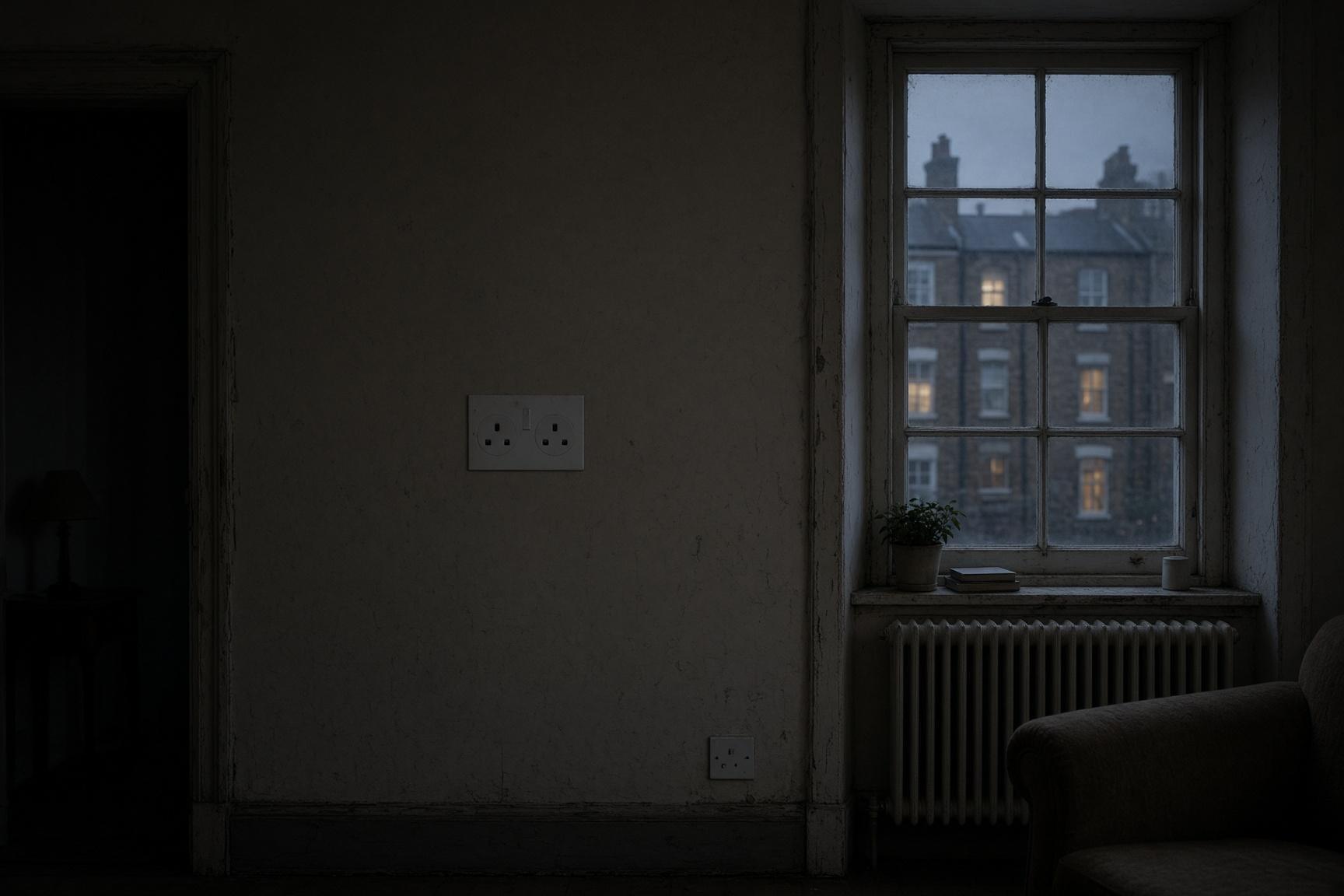
A burning smell from a socket with nothing plugged in can indicate a problem with the socket itself, its connections or the fixed wiring on the circuit. Because removing an appliance does not isolate the fixed electrical installation, the socket may still be energised.
This situation deserves professional investigation, particularly if the smell continues or the socket feels warm.
If multiple sockets smell burnt, or other electrical symptoms are occurring elsewhere in the property, the fault may extend beyond one socket. An electrician can test the affected circuit and determine whether the problem is localised or part of a wider electrical issue.
What Do Black Marks, Buzzing or a Hot Socket Mean?
Black marks, excessive heat, buzzing, crackling or melting are warning signs that should not be ignored. They can indicate overheating, damaged connections or electrical arcing and should be treated as evidence that the socket needs investigation.
Electrical Safety First specifically identifies burn marks, arcing sounds, hot plugs or sockets, blown fuses and circuit breakers that trip as electrical warning signs.
A socket should therefore be taken out of use if you notice:
Black or brown scorch marks
Scorching or discolouration can indicate previous or ongoing heat damage. Do not clean the marks off and continue using the socket without establishing their cause.
Buzzing or crackling
A buzzing socket or crackling sound can be associated with arcing or a poor electrical connection. Stop using the socket and have it investigated.
Melting
A melted socket or plug has already experienced abnormal heat. The damaged component requires replacement, but the cause of that heat must also be identified.
Repeated tripping
A circuit breaker or RCD operates as part of the installation’s protection. Repeated operation can indicate an unresolved electrical fault.
Do not repeatedly reset a protective device while a burning smell, heat or visible electrical damage is present.
How Does an Electrician Diagnose a Burning Socket?
An electrician can inspect the socket, plug and affected circuit and use electrical testing to determine whether the fault lies in the accessory, connections, wiring, appliance or wider circuit. The appropriate investigation depends on the symptoms and condition of the installation.
Fault finding may involve assessing visible heat damage, checking electrical connections and testing the relevant circuit.
Depending on what is found, remedial work might involve replacing a damaged socket, repairing a connection, addressing damaged wiring or investigating a fault elsewhere on the circuit.
TNS Electrical Solutions provides electrical fault finding and electrical repairs for issues including faulty sockets, tripped circuits and consumer-unit faults across London.
If several electrical problems are occurring throughout a property, wider inspection or testing may also be appropriate rather than treating each symptom separately.
Can a Burnt Electrical Socket Be Repaired?
In many cases, a damaged socket can be replaced, but whether that solves the problem depends on what caused the damage. If overheating resulted from a loose connection, damaged wiring, a faulty appliance or another circuit fault, that underlying problem also needs to be corrected.
The required repair might therefore range from replacing an individual socket to repairing damaged conductors or investigating the wider circuit.
Where heat has affected surrounding wiring or insulation, more remedial work may be necessary.
A qualified electrician should establish the extent of the damage before deciding which repair is appropriate.
How Much Does It Cost to Repair a Burning Socket?
The cost depends on whether the problem is confined to the socket or requires additional electrical fault finding and repairs. A straightforward accessory replacement is different from tracing damaged wiring, diagnosing intermittent faults or repairing a wider circuit problem.
Factors that can affect the final cost include:
- how quickly the fault can be located;
- whether the socket itself needs replacing;
- the condition of the wiring behind it;
- whether cable or circuit repairs are required;
- whether the connected appliance is contributing to the problem;
- accessibility of the affected wiring;
- whether several sockets or circuits are involved; and
- whether an emergency or out-of-hours attendance is required.
Ask for the fault to be diagnosed before assuming that replacing the socket alone will solve it.
TNS Electrical Solutions offers electrical repairs and fault finding in London and provides quotations for electrical work.
When Should I Call an Electrician About a Burning Smell?
Call a qualified electrician if a socket smells burnt, becomes unusually hot, has scorch marks, buzzes or crackles, sparks, melts or causes a circuit breaker or RCD to trip repeatedly. Professional assessment is also appropriate whenever the source of an electrical burning smell cannot be identified safely.
Prompt investigation is particularly important if:
- the smell persists with nothing plugged in;
- the socket continues getting hot;
- visible damage is present;
- more than one socket is affected;
- a breaker or RCD repeatedly trips;
- you suspect damaged or loose wiring; or
- the smell appears to be coming from inside a wall or fixed electrical installation.
TNS Electrical Solutions provides electrical repairs, fault finding and emergency electrical services for homes, rental properties and businesses across London. Coverage includes Fulham, Chelsea, Kensington, Putney, Wandsworth, Wimbledon, Hammersmith, Chiswick and surrounding areas.
If your socket smells burnt or shows signs of overheating, stop using it and arrange an assessment. A qualified electrician can determine whether the fault is confined to the socket or whether the plug, appliance, circuit, consumer unit or wider electrical installation also needs attention.
Safety disclaimer: This article provides general electrical safety information and is not a substitute for inspection or advice from a qualified electrician. Do not dismantle sockets or fixed electrical wiring unless you are competent to perform the work safely. If there is an active fire, smoke or immediate danger to people or property, leave the area and contact the emergency services.